Local roots. Global vision. Smart science.
Pioneering cooperation between science and industry
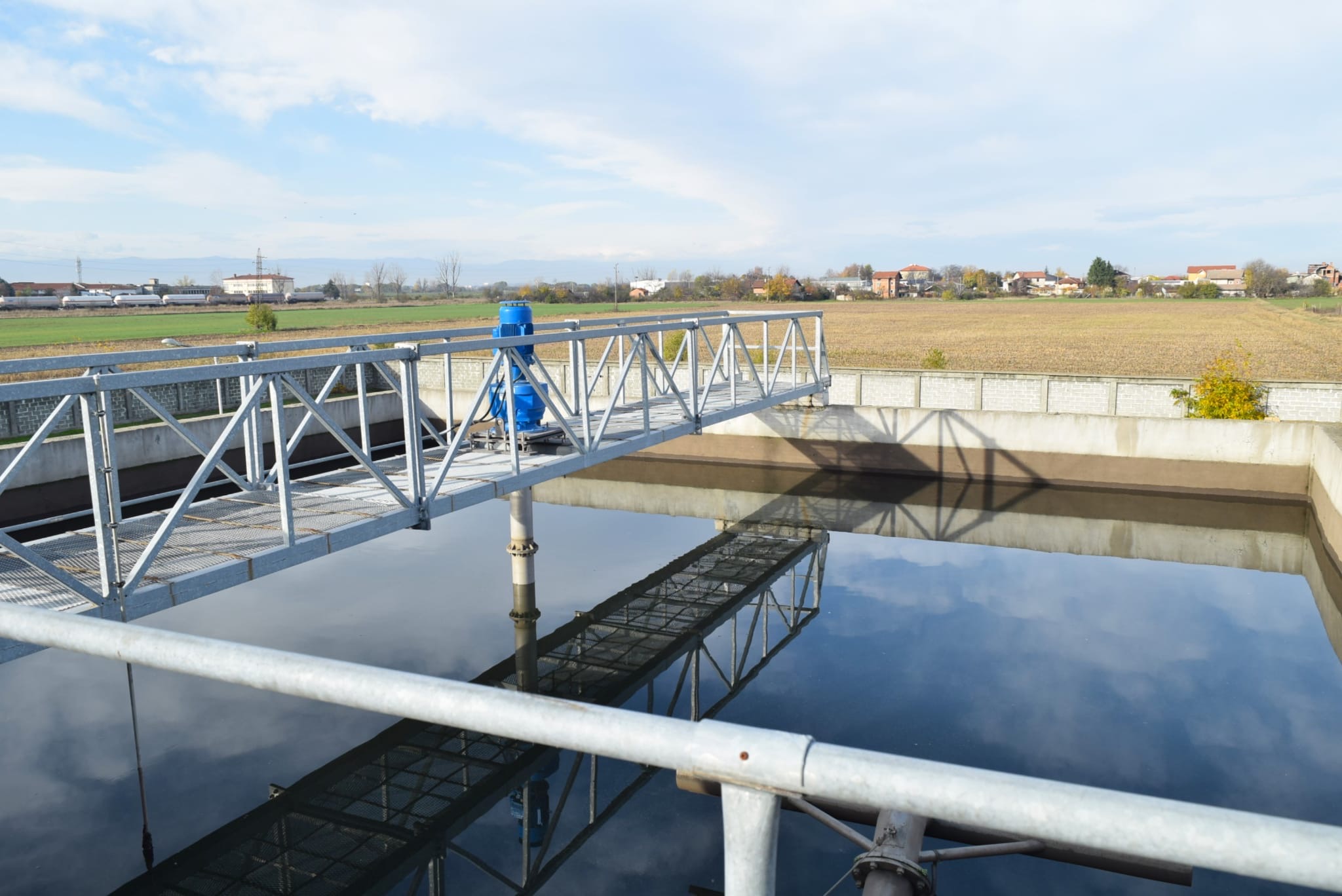
A SUCCESSFUL START TO BULGARIA’S FIRST QUATERNARY WASTEWATER TREATMENT PILOT
We at CCBRE have initiated a pioneering collaboration with the Benkovski Wastewater Treatment Plant (WWTP), marking the launch of Bulgaria’s first real-world quaternary wastewater treatment pilot. It aims to remove harmful micropollutants, such as pharmaceuticals, hormones, pesticides, cosmetics, solvents, dyes and PFAS, which cannot be captured by conventional treatment systems.
FROM IDEA TO PROTOTYPE: A JOINT SWISS BULGARIAN EFFORT
The collaboration began with a preliminary consultation in June 2025 between Prof. Dr. Petar Mandaliev (Co-Founder of CCBRE), Dr. Horst Matzke (Previous Executive Director of AVAG AG) and Nikolay Mihalkov (Director of the WWTP in Benkovski). Their assessment highlighted the urgent need for a fourth purification stage in industrial areas such as the Trakia Economic Zone (TEZ), where chemicals trace routinely bypass traditional mechanical, biological and chemical treatment.
Drawing upon 20 years of Swiss expertise, including foundational research from Eawag and large-scale pilot projects in Switzerland and Germany, the team developed a solution. European examples clearly demonstrate that granular activated carbon (GAC), often combined with sand and gravel filtration, can remove over 90% of priority micropollutants and significantly improve effluent quality.
THE PLOVDIV PROTOTYPE: QUATERNARY TREATMENT FOR SMALL COMMUNITIES
As part of the pilot structure, a gravity-based filtration unit was installed at the Benkovski WWTP (2,000 population equivalents), the treated water of which flows into an open irrigation canal used for agriculture.
The system includes three protective layers: Granular Activated Carbon (GAC), which adsorbs pharmaceuticals, hormones, pesticides and persistent chemicals; Fine sand layer, which removes fine particles and microplastics; Gravel support layer, which stabilises the flow and ensures long-term performance.
This passive design requires no electricity, is low-cost and easy to maintain, and can be adapted to the needs of small and medium-sized WWTPs.
WHY IT MATTERS
Benefits for human health: reduced exposure to pharmaceuticals, hormones and trace chemicals; lower risk of antibiotic resistance; safer water entering the food chain.
Benefits for nature: cleaner rivers, canals and groundwater; protection of aquatic life and biodiversity; long-term ecological stability.
Benefits for agriculture: reliable access to safer irrigation water; higher-quality produce; reduced risks of soil contamination.
A STRATEGIC STEP TOWARDS EU COMPLIANCE
Directive (EU) 2024/3019 now requires quaternary treatment at an increasing number of wastewater treatment plants (WWTPs) across Europe. With at least 20% of Bulgarian WWTPs expected to fall under these requirements, the CCBRE-Benkovski-Pilot-Initiative shows that affordable, scalable and compliant solutions can be implemented, even in smaller municipalities.
LOOKING AHEAD
This initiative is an important milestone for the Plovdiv region and Bulgaria as a whole. It proves that clean water can be achieved today, even with limited resources, through smart engineering and international collaboration.
It will lay the groundwork for future installations, research activities and national strategies that support modern water treatment in line with European and global standards.
Clean water is the future we are building today — and this collaboration marks the first step.


CENTRE FOR CLEANTECH AND BIOMASS RESOURCE EFFICIENCY
Contact us
info@ccbre.eu12 Mendeleev Blvd., Plovdiv 4000
Campus of the Agricultural University of Plovdiv